
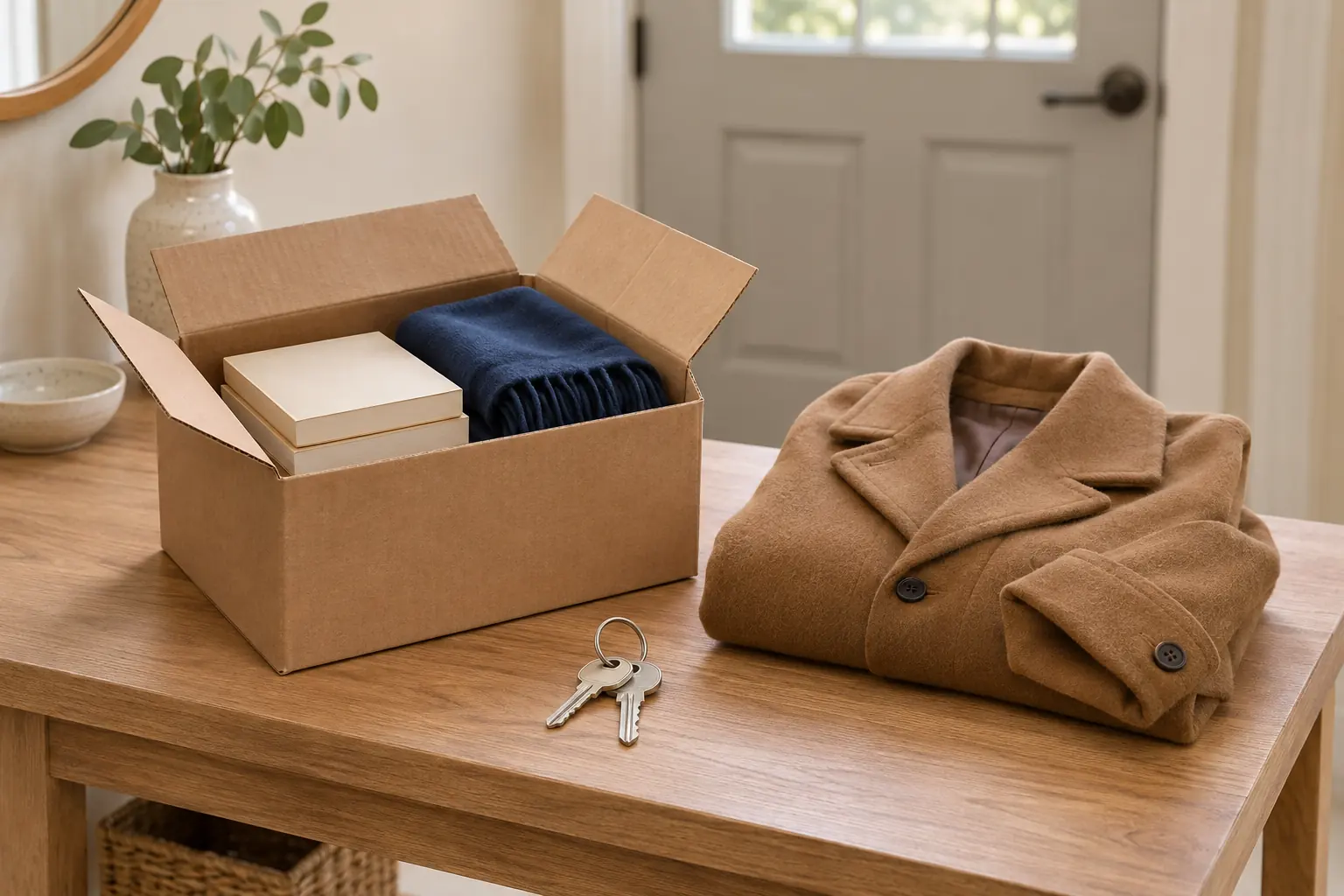
Working out how to get your stuff back from your ex begins with a clear list and an agreed way to exchange it. For an ordinary, safe return, ask for specific items, confirm the details before traveling, and keep the handoff about the belongings. A practical exchange does not have to become another conversation about the relationship.
A coat left on a hook can feel like unfinished business in more than one way. You may need it because the weather has turned cold. You may also wonder whether collecting it will lead to an apology, a hug, or a second chance. Those hopes deserve attention, but they do not need to decide how the coat gets home.
The examples below are for situations where contact is safe and permitted. If there are threats, disputed ownership, or legal restrictions, get appropriate local help. Do not enter a home without permission or use a belongings exchange to work around a court order.
Make a specific list before sending a message
Walk through what you remember leaving: clothes, books, chargers, work items, or other everyday belongings. Describe each item well enough that your ex can identify it. “My gray coat with the blue lining” is more useful than “all my stuff.”
Keep three things separate in your notes:
- Items you want returned, with useful descriptions and where you last saw them.
- Items your ex left with you that may need to go back.
- Anything whose ownership or return is disputed, including some shared purchases or gifts.
Your list helps organize a request; it does not decide who owns a disputed item. Keep those questions out of an ordinary pickup plan until you have suitable advice or agreement.
If you need something soon, explain the practical reason. “I need the work badge before my next shift” gives relevant information. You do not need to wait for a popular no-contact countdown to finish before addressing a necessary task through a permitted channel.
Send a clear request with a workable next step
Use an appropriate existing channel. State what you need and suggest a practical way to arrange it. Give the other person something specific to answer, without adding the history of the breakup.
For example: “I’d like to arrange the return of my gray coat, two cookbooks, and laptop charger. Could we agree on a brief exchange this week? I’m available Tuesday after work or Saturday morning. Please let me know what works.”
Those times are sample options, not a recommended deadline. Choose options that fit the situation, including any genuine urgency. If your ex proposes something different, check whether it works before treating the plan as settled.
The University of Illinois Counseling Center describes setting new limits on time together and personal contact after a breakup. A belongings request can fit within limited contact with your ex: the exchange has a defined purpose, even if you are stepping away from other conversations.
Avoid attaching a relationship question to the request. “Can I get my charger, and did any of this mean anything to you?” gives one message two very different jobs.
Agree on the handoff before anyone travels
A suggested time is not a confirmed appointment. Before leaving, make sure you both understand the items, time, place, and people involved. Choose a method that is practical, safe, and acceptable to everyone taking part.
For an ordinary exchange, possible arrangements include:
- A brief handoff at an agreed location, with the belongings packed beforehand.
- A willing third person collecting or receiving the items, with both former partners’ agreement.
- Mailing or shipping suitable items after agreeing on the address, packing, costs, and any tracking needed.
Third-party help should have a clear, limited role. A friend can pass over a box without carrying a personal message, reporting on your ex’s mood, or trying to negotiate a reunion. Ask the friend first, and confirm that the arrangement is acceptable before sending them.
If an order restricts contact, ask a qualified local professional what is permitted before involving anyone else. Washington Law Help’s state-specific guidance notes that restrictions can include contact through another person. A friend’s involvement does not automatically make an exchange allowed.
Consider the physical job, too. A box of books needs suitable packaging and transport. Furniture may need a separately arranged collection with permission, enough help, and clear access details. Do not turn a small pickup into an unexpected move-out visit.
A doorstep drop should also be agreed in advance. Leaving a box outside without confirmation can create a new problem if it is damaged, stolen, or never seen.
Keep the exchange brief without rushing the details
Bring the list and whatever you agreed to return. Where practical and safe, check the items against the list before the exchange ends. You are checking whether the charger is there, not looking for clues about how your ex feels.
If an item is missing, name it plainly: “The coat and books are here. I don’t see the charger. Were you able to find it?” A missing item does not, by itself, tell you whether someone forgot, misunderstood, or deliberately kept it.
If the conversation turns personal, you can return to the purpose: “I’m here to collect the things we agreed on. I’m not ready to discuss the relationship.” You do not need to accept an invitation inside or extend the visit because the exchange feels awkward.
University of Colorado Boulder suggests keeping unavoidable post-breakup encounters polite and brief. Applied to a belongings exchange, that can mean a simple greeting, the practical check, and a clear ending: “Thanks for getting these ready. I have everything on the list.”
You do not owe physical affection as part of a handoff. A calm exchange can be successful even if it does not feel warm, satisfying, or emotionally final.
Handle your ex’s belongings with the same care
If you still have their things, prepare a list and offer a practical return arrangement through a safe, permitted channel. Pack ordinary items carefully and include the parts that belong with them, such as the cable for a device.
Do not make the return of undisputed belongings depend on an apology, a personal conversation, or getting your own things back first. The exchange should solve the practical problem, rather than give either person another way to keep the argument going.
Gifts and shared purchases may raise different questions from a borrowed coat or forgotten book. Avoid assuming that every gift must be returned, or that everything left behind is yours to keep. If the answer matters and you disagree, seek local legal advice.
If belongings remain uncollected, do not invent a deadline after which you can throw them away or sell them. Ask what applies to your circumstances before disposing of someone else’s property.
If your ex does not reply or will not return your things
When a routine request goes unanswered and contact remains safe and permitted, a concise follow-up may clarify what is still needed. For example: “I’m following up about the coat, books, and charger. Please let me know whether you can arrange their return or whether there’s a problem with any item on the list.”
Repeated messages, surprise visits, or threats are not a useful next stage. If you have been blocked or told not to make personal contact, do not keep trying new accounts or recruit people to pressure your ex. Seek appropriate advice about recovering the items through an allowed process.
Keep the messages about the request and a record of which items remain unresolved. Gather any relevant receipts or other records you already have for a professional to review. This article cannot decide ownership or tell you which legal remedy applies.
USAGov provides links to legal aid and attorney resources, including services with income or other eligibility limits. A local legal professional can help you understand options for a refusal, disputed property, or an unclear restriction. You do not have to keep negotiating the breakup to find out what those options are.
Use different help if the exchange feels unsafe
Threats, coercion, or fear make this more than an awkward pickup. Love is respect explains that an abusive ex may disregard boundaries and that danger can continue after the breakup. Choosing a public place or bringing a friend does not guarantee safety.
Contact a relationship-abuse advocate for help considering your circumstances before arranging an exchange. You can ask about a plan suited to the risks and any legal restrictions. Preserve threatening or harassing messages, and seek emergency help if you are in immediate danger.
You do not have to attend a meeting alone, enter a home, or agree to discuss the relationship just because your belongings are there. If an essential item is being withheld, tell the professional helping you why it is urgent.
Let the coat be a coat again
Getting your belongings back may bring relief, sadness, or both. It settles a practical task; it may not answer the emotional questions you carried into it. Give yourself something ordinary to do afterward, or arrange to talk with a trusted friend.
Check what has been returned and note anything still outstanding. Then let the completed part stay completed. The coat can go on your hook, the books on your shelf, and the charger where you need it. They can become useful objects in your own life again.
Stay optimistic yet realistic.

Browse more No Contact Rule articles.
Sources and Further Reading
- University of Illinois Counseling Center: Breakups — personal boundaries and contact after a relationship ends
- University of Colorado Boulder: How to Take Care of Yourself After a Breakup — brief encounters and support
- Washington Law Help: Get Your Stuff Back — Washington-specific information about property disputes and contact restrictions
- USAGov: Find a Lawyer for Affordable Legal Aid — resources for locating help in your area
- Love is respect: Should We Break Up? — safety concerns during and after an abusive relationship (PDF)