
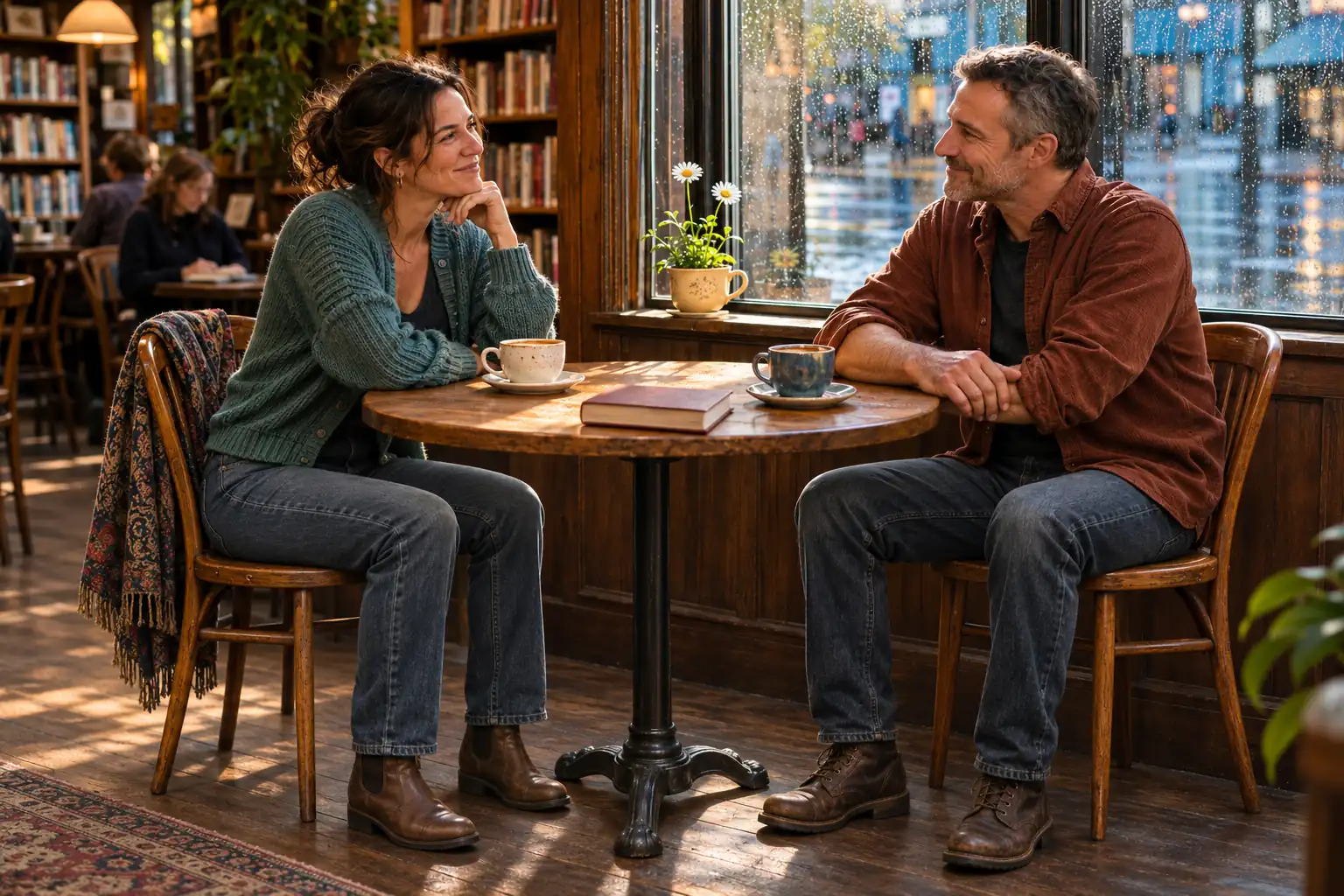
Learning how to start dating again after a breakup begins with deciding whether you want to meet someone, then choosing a small step you feel comfortable taking. You can be curious and nervous at the same time. Be honest about what you can offer, keep your boundaries, and give yourself permission to slow down or stop.
Maybe there’s a shirt hanging on the bedroom door because you’ve changed your mind about wearing it three times. A friend has offered to introduce you to someone. Part of you wants to go; another part wonders whether you still know how any of this works. You don’t need to plan a whole relationship tonight. You can decide whether you’d enjoy one conversation.
When should you start dating after a breakup?
There isn’t a waiting period that fits everyone. The University of Illinois Counseling Center notes that there is no official rule for how long feeling better after a breakup takes. Turning the length of your former relationship into a dating deadline doesn’t account for what happened or how you’re doing now.
Research also gives us reason to question the idea that a quick new relationship must be unhealthy. In two studies, Claudia Brumbaugh and R. Chris Fraley found that beginning a new relationship sooner was associated with some better measures of adjustment among people who had new partners.
That doesn’t prove that dating quickly caused the improvement. The samples were mostly college-aged, and the researchers acknowledged limits in the timing and design of their studies. Their findings don’t prescribe a waiting period or establish dating as a treatment for heartbreak.
Instead of asking only how many weeks have passed, consider what you want from meeting someone now. A pleasant evening, a casual connection, and a committed relationship involve different expectations. You can decide what you’re open to without pretending to know where it will lead.
How do you know if you’re ready to date again?
The relationship education organization love is respect encourages people to consider their reasons for dating, the time they can give, and the boundaries they want. A few questions can help you think it through:
- Am I interested in getting to know this person, or mainly hoping my ex will hear about it?
- Can I be honest about the kind of connection I’m available for?
- Can I make room for dating without abandoning the people and routines that support me?
- Would I feel able to decline another date, and respect the other person’s choice to do the same?
You don’t need perfect answers. Use them to identify anything you want to sort out before going further.
Still missing your ex isn’t, by itself, a verdict on whether you can meet someone new. Pay attention to what happens in practice. If every conversation becomes an attempt to recreate the old relationship, it may help to pause. Our guide to signs you are healing from a breakup looks at everyday progress beyond your relationship status.
What is a manageable first step back into dating?
Choose something with a clear beginning and end. You might accept an introduction, send a message to someone whose profile interests you, or suggest coffee at a busy café. You can make one plan without filling your calendar.
If you’re dating after a long relationship, the unfamiliar details may feel bigger than the date itself. What picture should you use? Are you supposed to message every day? Do people still call? You can ask about preferences instead of trying to follow an unwritten rulebook.
For example: “I like talking with you. Would you rather keep messaging for a bit or meet for coffee?” That gives the other person a choice and gives you useful information.
If you want to try a dating app
Start with an honest description and recent photos that look like you. Include something someone could ask about: the dish you’re learning to cook, the local trails you enjoy, or your enthusiastic but questionable karaoke choices. You don’t have to sell a newly perfected version of yourself.
Apps are optional. You can also meet people through introductions, community events, or shared interests. Enjoying an activity doesn’t obligate you to turn it into a search for a partner.
Make the first meeting easier to leave
RAINN’s safer-dating guidance recommends meeting in a busy public place, telling someone you trust your plans, and arranging your own transportation. Keep your home address and other private details to yourself while you get to know someone. When using an app, avoid pressure to move the conversation elsewhere immediately.
A short coffee date can be enough. You can say, “I have time for coffee on Saturday afternoon,” and leave when you’ve planned to. If you feel uncomfortable, you can leave sooner. These precautions can reduce risk; they cannot guarantee safety or make you responsible for someone else’s harmful behavior.
How do you explain that you want to take things slowly?
Be specific about what “slowly” means to you. It might mean meeting occasionally, keeping evenings with friends, waiting before physical intimacy, or spending more time getting acquainted before deciding on commitment.
You could say, “I’m interested in getting to know you. I’ve come out of a relationship, and I want to take my time before making commitments.” You can share that without giving a detailed account of the breakup.
If you already know you want something casual, say so. Leaving someone to assume you’re heading toward a serious relationship isn’t the same as being uncertain about the future. And enjoying a date doesn’t automatically settle questions about exclusivity; those deserve a conversation.
Listen to what the other person wants, too. Love is respect points out that people’s needs sometimes differ without either person being wrong. If they want a commitment you can’t offer, respect that difference. You don’t have to rush, and they don’t have to wait.
Physical affection is always a choice
A date, a paid dinner, or an earlier kiss doesn’t create an obligation to continue. RAINN describes consent as voluntary and ongoing: agreeing to one activity doesn’t mean agreeing to another, and either person can change their mind.
You can say, “I’d like to see you again, but I’m not ready to kiss.” If you’re unsure what someone else wants, ask. Stop if they withdraw consent or seem uncomfortable; silence isn’t permission. Being considerate includes accepting a limit without trying to bargain it away.
What if you’re nervous or afraid of getting hurt again?
Start by naming what worries you. “I won’t know what to say” calls for a different response from “This person keeps pushing after I’ve said no.” You can prepare a few conversation starters for the first concern. You don’t need to push through the second to prove you’re ready.
For ordinary first-date uncertainty, keep the task small. Ask about something you actually want to know. Tell a story from your week. If there’s a pause, have a sip of coffee. A quiet moment doesn’t require an emergency personality transplant.
You may notice yourself comparing the date with your ex. When that happens, try returning to the person in front of you. What are they saying? What interests you about them? You don’t have to decide who is funnier or whether the evening feels like your old first date.
Afterward, consider whether you felt respected, could be yourself, and would like another conversation. If you don’t, a brief message can be enough: “Thanks for meeting me. I don’t feel the connection I’m looking for, so I won’t be arranging another date.” If responding would put you at risk, prioritize your safety.
If the other person declines, it may sting. Make room for that feeling without treating one person’s choice as a judgment on your future. You can spend the evening with a friend, put the app away, and decide later whether you want to try again.
When would talking it through help?
If fear from a harmful relationship is making new connections difficult, a counselor or advocate can help you explore your options at your pace. You don’t have to use dating to work through that experience. The University of Illinois also recommends seeking professional support when breakup distress significantly disrupts daily life. Getting help doesn’t commit you to dating sooner.
What if you don’t want to date at all?
You can choose to remain single for now or for the foreseeable future. Love is respect explicitly recognizes that being in a relationship isn’t what everyone wants. A friend being excited to introduce you to someone doesn’t make you responsible for accepting.
“I appreciate you thinking of me, but I’m enjoying having this time to myself” is a complete answer. You can also change your mind later without having to defend the earlier choice.
And if you try dating and decide it isn’t what you want right now, you haven’t failed. Let anyone you’re seeing know what you can honestly offer, then make the adjustment you need.
That shirt on the bedroom door can stay there until tomorrow. Or you can put it on and meet someone for coffee. Either way, you get to choose the next step. If you go, the evening doesn’t have to become a love story to be worthwhile. Perhaps you have a good conversation, laugh at something unexpected, and head home glad you went. That can be enough.
Stay optimistic yet realistic.

Browse more Breakup Recovery articles.
Sources and Further Reading
- Brumbaugh and Fraley: Too fast, too soon? An empirical investigation into rebound relationships (2015)
- University of Illinois Counseling Center: Breakups
- Love is respect: Am I ready to date?
- Love is respect: Respecting your partner’s boundaries
- RAINN: Tips for Safer Dating: Online & IRL
- RAINN: Consent 101: Respect, Boundaries, & Building Trust